Table Of Content

Mobile German rocket batteries were able to lay down heavy and unexpected concentrations of fire on Allied positions. The 150-millimetre Nebelwerfer, a towed, six-tube launcher, was particularly respected by U.S. and British troops, to whom it was known as the “Screaming Meemie” or “Moaning Minnie” for the eerie sound made by the incoming rockets. Hale sold his patent rights to the United States in time for some 2,000 rockets to be made for the Mexican War, 1846–48.
Ballistic Missiles
SM-3 Ballistic Missile Interceptor Used for First Time in Combat, Officials Confirm - USNI News - USNI News
SM-3 Ballistic Missile Interceptor Used for First Time in Combat, Officials Confirm - USNI News.
Posted: Mon, 15 Apr 2024 17:13:00 GMT [source]
A five-inch rocket with an explosive warhead was developed in Great Britain. These rockets, fired from specially equipped naval vessels, were used in heavy coastal bombardment prior to landings in the Mediterranean. The next significant development in rocketry occurred about the middle of the 19th century. William Hale, a British engineer, invented a method of successfully eliminating the deadweight of the flight-stabilizing guide stick. He developed various designs, including curved vanes that were acted upon by the rocket jet. These rockets, stabilized by means of spin, represented a major improvement in performance and ease of handling.
Short-range subsonic
From 16 to 48 Katyushas were fired from a boxlike launcher known as the Stalin Organ, mounted on a gun carriage. Maximum ranges of Congreve rockets were from one-half mile to two miles (0.8 to 3.2 kilometres), depending upon size. They were competitive in performance and cost with the ponderous 10-inch mortar and were vastly more mobile. Congreve’s metal rocket bodies were equipped on one side with two or three thin metal loops into which a long guide stick was inserted and crimped firm. Weights of eight different sizes of these rockets ranged up to 60 pounds. In addition to aerial bombardment, Congreve’s rockets were often fired horizontally along the ground.
Fact Sheet: Ballistic vs. Cruise Missiles
Cruise missiles are self-propelled, guided weapons that can be launched from various platforms, including aircraft, ships, or ground-based launchers. They are designed to fly at low altitudes and can be programmed to follow a specific flight path, often hugging the terrain, which makes them difficult to detect and intercept. Cruise missiles can carry various types of warheads and are used for precise, long-range strikes on specific targets, such as military installations, infrastructure, or high-value targets.
Integrated Guided Missile Development Programme (IGMDP)
At the Battle of Bladensburg (August 24) the use of rockets assisted British forces to turn the flank of the American troops defending Washington, D.C. As a result, the British were able to capture the city. In September the British forces attempted to capture Fort McHenry, which guarded Baltimore harbour. Rockets were fired from a specially designed ship, the Erebus, and from small boats. The British were unsuccessful in their bombardment, but on that occasion Francis Scott Key, inspired by the sight of the night engagement, wrote “The Star Spangled Banner,” later adopted as the United States national anthem. “The rockets’ red glare” has continued to memorialize Congreve’s rockets ever since.
The present website is hosted by WordPress.com, a service by Automattic. Automattic is a global company with thousands of servers located in several separate data centres around the world. While Automattic takes care of the security of the platform, we, the European Parliamentary Research Service, own the content of the blog. For more detailed information about the compliance of Automattic products and services with the EU General Data Protection Regulation (GDPR), please see their dedicated page. Strictly Necessary Cookie should be enabled at all times so that we can save your preferences for cookie settings.

Barrage rockets
Missiles range in size from small tactical weapons with ranges of only a few hundred feet to considerably bigger strategic weapons with ranges of several thousand kilometres. Missiles are an important part of the defence system of any country, apart from its armed forces. A propeller-driven underwater missile is called a torpedo, and a guided missile powered along a low, level flight path by an air-sucking jet engine is known as a cruise missile. Cruise missiles are guided, jet or propeller-driven projectiles that can fly at low altitudes, follow a flexible path, and are capable of precision strikes.
Different types of Sensors Related links
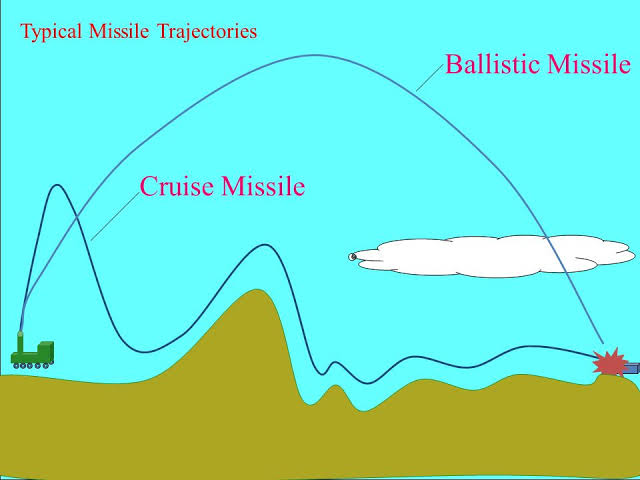
After the booster burns out, the payload section continues on a ballistic trajectory to the target. Cruise missiles have rocket or jet engines that are powered during the entire flight. It allows the missile to cruise low through the atmosphere, sometimes just above ground level.
The main outcome of the United States Navy submarine missile project was the SSM-N-8 Regulus missile, based upon the V-1. Boost Phase begins at launch and lasts until the rocket engine(s) stops firing and the missile begins unpowered flight. Things got real, though, on Jan. 7, 2020, when Iran launched more than a dozen ballistic missiles at two Iraqi military bases housing U.S. troops. It was Iran's retaliation for the U.S. drone strike that killed Iran Gen. Qassem Soleimani on Jan. 3, 2020.
According to the Federation of American Scientists, a ballistic missile is one that has a ballistic trajectory over most of its flight path. What that means is that once the missile burns up the fuel that propels it, the missile keeps moving, the same way that a bullet does after it's been fired out of a gun. It follows a path determined by the speed of its launch and the force of gravity trying to pull it back toward the Earth's surface.
Ballistic missiles present key advantages (See Table 1) compared with cruise missiles (the latter are propelled until impact and include a guidance system). Ballistic missiles can reach a longer range with lower fuel in a relatively short time (around 30 minutes for an ICBM). Their very high speed in the ballistic phase also makes them harder to intercept and destroy, even if they are easily detected.
He also standardized construction details and used improved production techniques. Also, his designs made it possible to choose either an explosive (ball charge) or incendiary warhead. The explosive warhead was separately ignited and could be timed by trimming the fuse length before launching. Ballistic missiles first came into use during World War II, when the Germans used a ballistic missile called the V-2 to attack London. British air defenses designed to stop aircraft couldn't stop the V-2s, because the rockets traveled too high into the upper atmosphere and moved too fast. Warhead types can range from conventional aerial explosives like Tritonol 80/20 to chemical, nuclear or thermonuclear types.




No comments:
Post a Comment